Beginners can relax: the timberline french manicure is a structured two-color French that reads professional even when you control only a few variables. We outline how to estimate product use, schedule restocks, and execute a khaki base with cool or warm taupe smile lines using a high-gloss, opaque gel polish family.
Plan the service and timing
Decide the scope before the client sits down. A tidy timberline French uses one base shade across all nails and one contrasting taupe for the smile lines. For salon timing, allocate 45–60 minutes per hand for full prep, application and curing on natural nails; plan 60–75 minutes when adding length or sculpting extensions. We suggest blocking 75 minutes for a new client or a detailed shape to avoid mid-week rescheduling due to overruns.
Estimate product consumption: with 15ml bottles, a single shade typically covers 60–80 full sets when used as two thin coats. Plan restock when your remaining bottle quantity approximates two weeks of scheduled services to avoid rush orders.
Prep the canvas
Start with standard salon prep: sanitise, remove previous product, lightly buff, push cuticles, and clean the nail plate with a lint-free wipe and nail cleanser. Base adhesion matters more with olive and khaki tones because their opacity reveals streaks more readily; ensure the natural nail is fully matted and free of oils.
For repeatable results, prepare a small stencil or smile-line guide size for your chosen tip width. We prefer a 1.5–2.5 mm smile line for most clients — adjust wider for longer nails and narrower for shorter nails. Position guides consistently and confirm the client agrees on contrast.
Apply the base and control opacity
Choose an olive-khaki base from the palette that reads khaki olive or olive drab depending on the client’s preference. Apply a thin, even first coat and cure for 60–120 seconds under an LED/UV lamp per manufacturer guidance. A second thin coat will give the high-gloss opaque finish this look requires while keeping edges clean.
We recommend a two-pass technique: first pass to lock color and second pass to perfect coverage and free-edge sealing. Use a slightly thicker bead at the free edge during the second pass to prevent lifting. Clean up excess immediately with a microbrush dampened with appropriate remover — do not flood the cuticle area.
Mask and paint the taupe smile line
Decide between cool grey-taupe or warm taupe smiles based on the client’s skin tone and desired seasonal mood. Cool grey-taupe reads more editorial; warm taupe feels earthy and soft. Place your smile-line guides consistently, then apply your taupe shade with a thin brush stroke across the tip area.
For crisp lines, use a single short brush stroke from left to right (or right to left if that’s your dominant hand direction) and cure immediately. Remove the guide and inspect the edge — if you need a sharper line, use an uncured thin coat to feather small corrections and then cure again.
Pro tip: Keep a tiny palette of the taupe next to your station for micro-dosing. Pull a small bead when you need to re-touch a smile line rather than dipping the main brush repeatedly; this preserves viscosity and helps avoid pooling.
Finish, cure and inspect
After both colors are cured, apply a glossy topcoat in thin layers and cure per lamp directions. Seal the free edge with the topcoat and perform a final wipe if the topcoat leaves inhibition residue. Check for uniform gloss across the khaki-to-taupe transition — the high-gloss creme finish is essential to the timberline aesthetic.
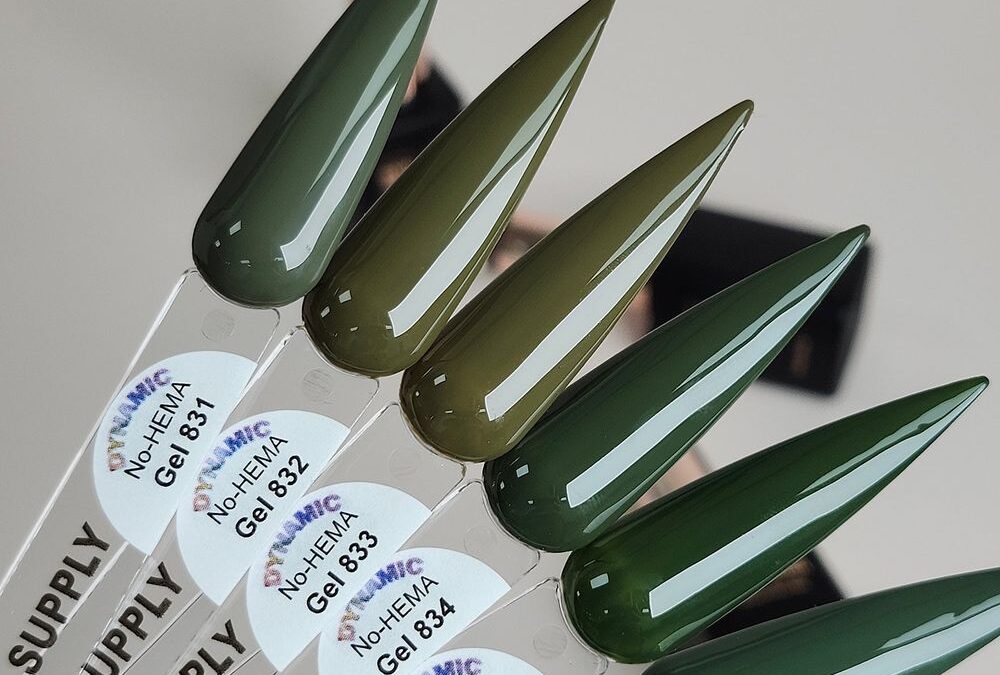
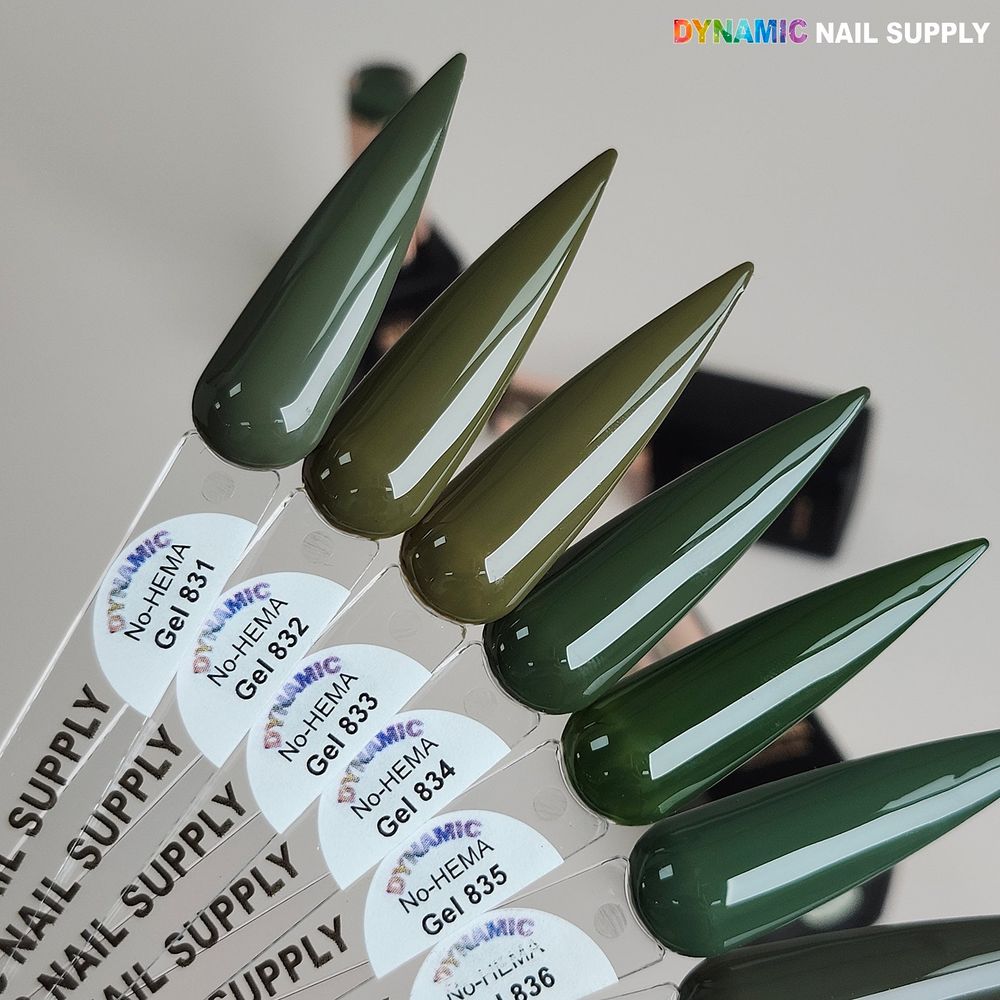
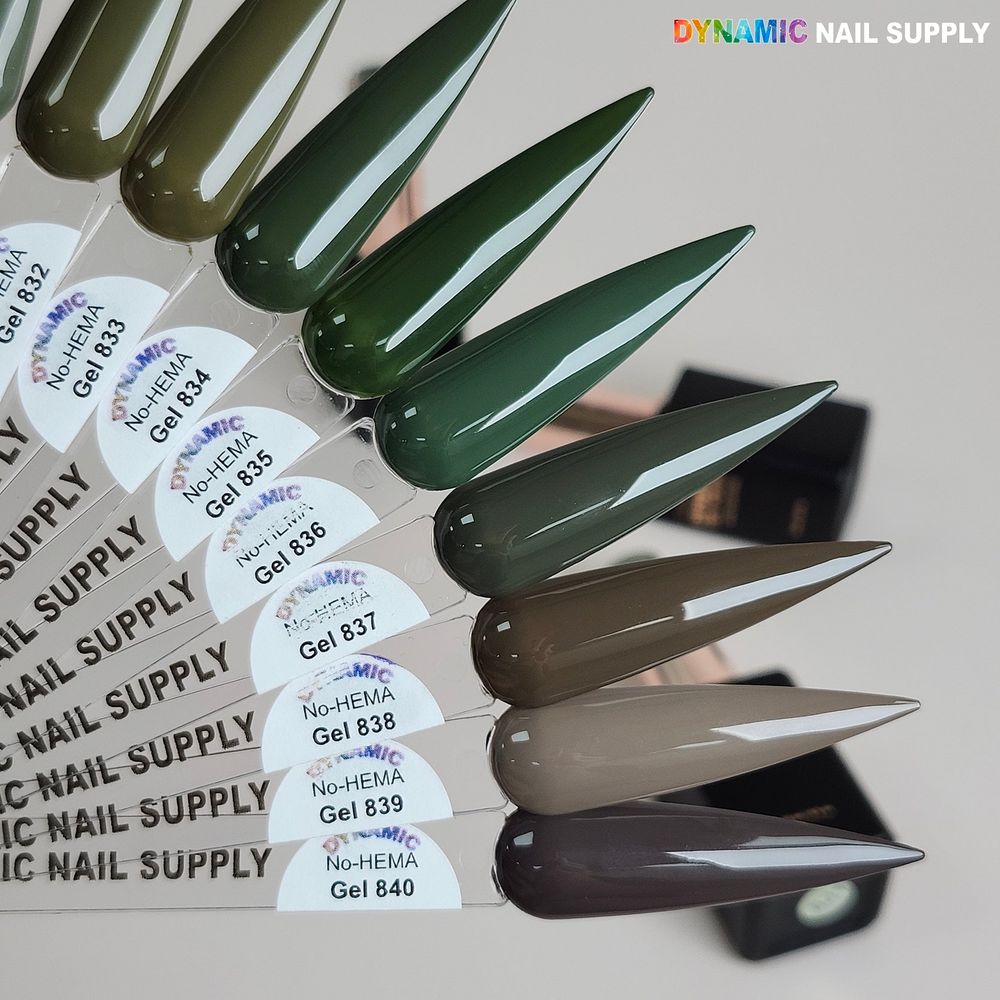
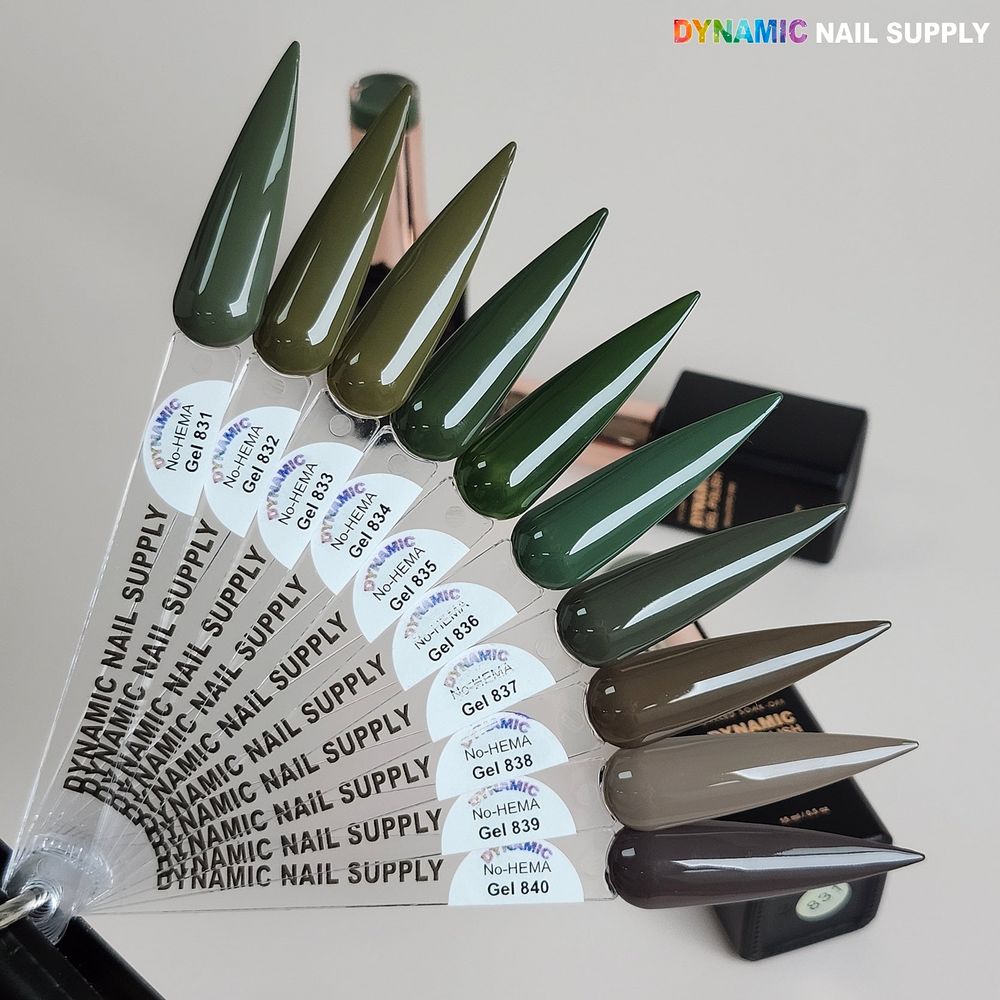
Photograph the finished hand for your service gallery to show the progression from muted olive to saturated emerald companions and the balancing taupe accents. Note which taupe variant your client chose for future repeatability.
Spotlight No-HEMA Gel 831
Give special attention to No-HEMA Gel 831 when selecting your khaki base. In the display, Gel 831 presents as a dusty grey-green that sits at the muted start of the set’s progression and makes an excellent neutral base for both cool grey-taupe and warm taupe smile lines. It cures to a consistent high-gloss opaque creme that hides brushstrokes when applied in thin, controlled passes and pairs neatly with deeper forest or emerald accents if you add an accent nail.
Pro tip: Use Gel 831 as the standard clinic base for clients who want a subtle timberline look; its dusty undertone reduces contrast with fair skin and avoids looking overly military on warm undertones.
Estimate restock and avoid running out mid-week
Track bottle openings and mark the date when a bottle drops below 25% capacity. For a busy salon running this service twice daily, expect to consume a single shade bottle faster than general polishes because the look relies on opacity and two-coat coverage. Reorder single shades or the whole set ahead of forecasted fall demand; individual bottles are $8 and the whole set is offered at $80, prices may change.
Keep one backup bottle of your most-used base (often Gel 831 in this palette) on the shelf at all times. If you rotate between cool and warm taupes, stock both and label them in your dispenser to avoid cross-use errors during a client appointment.
Finish with care and safety
Handle HEMA-free products as you would any gel polish: avoid direct skin contact, use proper ventilation, and cure under lamps for the recommended 60–120 seconds. Dispose of wipes and contaminated implements according to salon hygiene rules and store bottles upright in a cool, dark shelf to preserve viscosity.
We recommend keeping a written restock log and a small emergency kit with an extra 15ml bottle of your khaki base and a taupe so you never finish a set mid-appointment. If you use this palette often, label bottles with opening dates and reorder when you hit the two-week threshold.
For inventory planning and shelf placement that supports repeatable timberline french manicure services, consider keeping Gel 831 at the front of your station.
Plan inventory around the most-used base and keep a backup No-HEMA Gel 831 on hand so you never run short during fall bookings: No-HEMA Gel 831